

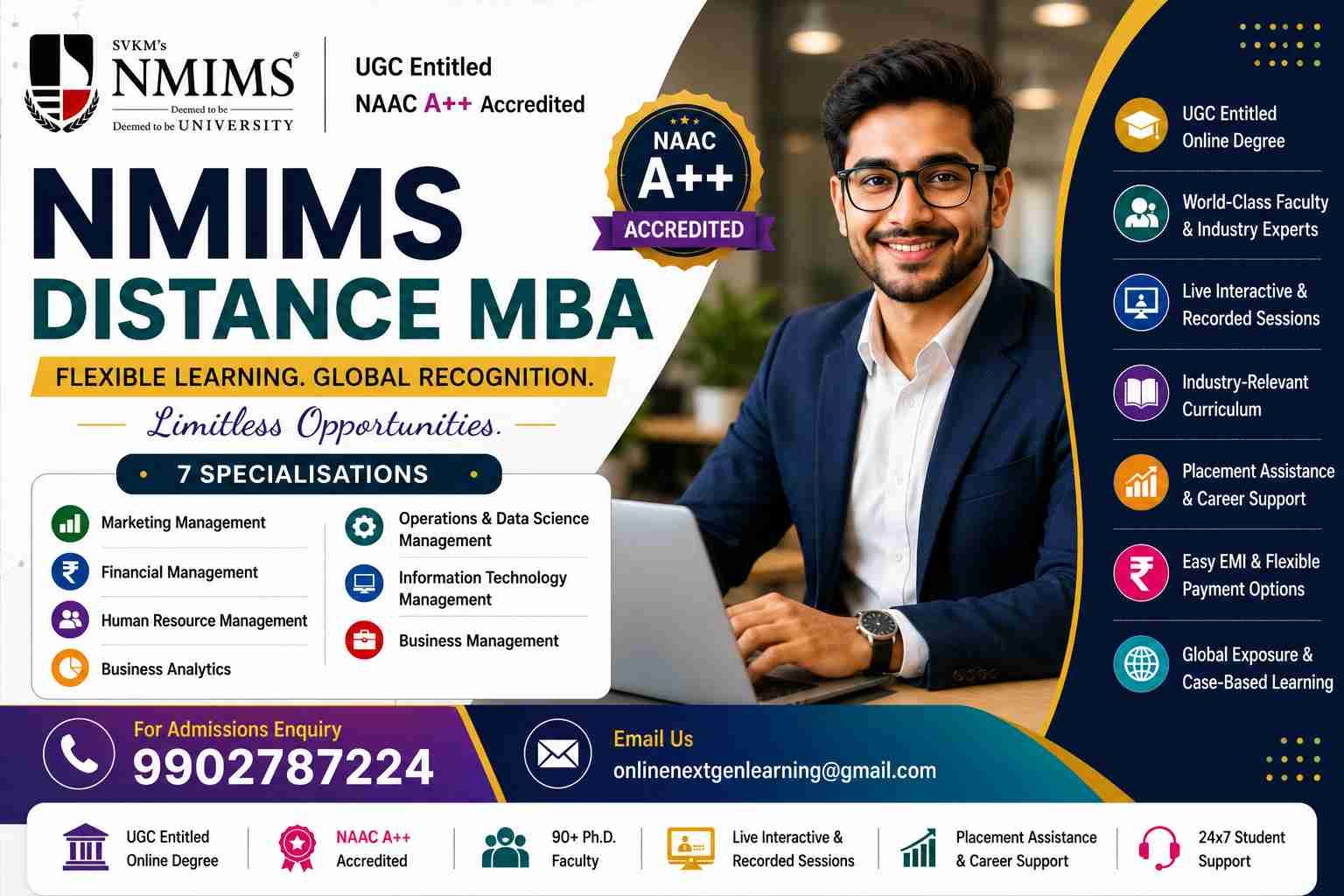
UGC Approved Online MBA in Information Technology:
Build a Future-Ready Career in Technology Management
UGC Approved Online MBA in Information Technology is a career-oriented postgraduate management program designed for graduates, IT professionals, software engineers, entrepreneurs, project managers, and working executives who want to combine technology expertise with business management, strategic thinking, leadership, and digital transformation.
In today’s technology-driven business environment, Information Technology is no longer limited to technical support. Organizations across industries rely on technology for digital transformation, cybersecurity, automation, data-driven decision-making, product development, operational efficiency, and business growth. This growing dependence on technology has created demand for professionals who understand both IT and management.
An Online MBA in Information Technology provides an opportunity to develop this combination while allowing working professionals to continue their careers. The program described in the supplied material focuses on technology management, cybersecurity, digital transformation, emerging technologies, strategic thinking, and leadership.
Why Choose a UGC Approved Online MBA in Information Technology?
A UGC Approved Online MBA in Information Technology can be an attractive option for professionals who want to pursue postgraduate management education without putting their careers on hold.
The program combines core management education with contemporary Information Technology practices and focuses on developing:
- Leadership capabilities
- Strategic thinking
- Technology management
- Digital innovation
- Business decision-making
- Problem-solving
- Technology-driven business strategy
- Digital transformation knowledge
The supplied material describes the learning approach as learner-centric, incorporating live online lectures, recorded sessions, digital learning resources, industry-oriented assignments, case studies, and project-based learning.
This combination allows learners to understand how technology can be aligned with business objectives rather than treating technology as an isolated function.
What Makes an Online MBA in Information Technology Relevant Today?
Technology is changing almost every aspect of business.
Artificial Intelligence is influencing decision-making and automation. Cloud computing is transforming IT infrastructure. Cybersecurity has become an essential organizational priority. Digital platforms are changing customer experiences. Data governance is becoming increasingly important. Automation is reshaping business processes.
As technology becomes more deeply integrated into business strategy, organizations need professionals who can communicate across both technical and managerial functions.
An Information Technology MBA can help professionals develop this broader perspective by combining:
Technology + Management + Strategy + Leadership + Innovation
Major Benefits of a UGC Approved Online MBA in Information Technology
For professionals seeking career advancement, the supplied program material highlights several benefits.
Key advantages include:
- Flexible online learning
- Working-professional-friendly study format
- Industry-oriented curriculum
- Application-based learning
- Experienced faculty and academic mentors
- Live interactive online classes
- Recorded lectures
- Advanced Learning Management System (LMS)
- Digital study materials
- Practical assignments
- Real-world case studies
- Project-based learning
- Technology-focused specialization
- Networking opportunities
- Learning from anywhere without interrupting employment
These features are designed to help learners strengthen technical knowledge while developing managerial and leadership capabilities.
UGC Approved Online MBA in Information Technology Fee Structure
According to the supplied program information, the fee options are:
Fee Option | Amount |
Annual Fee | ₹1,05,000 |
Semester-wise Fee | ₹55,000 per semester |
One-time Program Fee | ₹1,96,000 |
The supplied material identifies the one-time payment as an optional payment mode.
Important: Students should verify the latest fee structure, payment schedule, admission-cycle requirements, and applicable charges before enrollment.
Eligibility for a UGC Approved Online MBA in Information Technology
According to the supplied material, candidates should have:
- A Bachelor’s Degree (10+2+3) from a recognized university
- Minimum qualifying marks as prescribed by the university
The program is particularly relevant for:
- Fresh graduates
- IT professionals
- Software engineers
- Entrepreneurs
- Project managers
- Working executives
- Professionals seeking technology-management expertise
Applicants should always verify the current eligibility criteria applicable to their intended admission cycle.
UGC Approved Online MBA in Information Technology Curriculum
The curriculum combines business management fundamentals with specialized Information Technology subjects, creating a multidisciplinary learning pathway.
Semester 1
- Business Communication
- Financial Accounting
- Marketing Management
- Micro Economics & Macro Economics
- Organisational Behaviour
- Quantitative Methods – I
The first semester establishes the foundation in business communication, accounting, economics, marketing, organizational behaviour, and quantitative methods.
Semester 2
- Business Analytics
- Cost & Management Accounting
- Legal Aspect of Business
- Strategic Management
- Human Resource Management
- Operations Management
This semester develops broader management knowledge across analytics, strategy, finance-related concepts, HR, business law, and operations.
Semester 3
- Corporate Finance
- Research Methodology
- Project Pre-work
- Cybersecurity
- Data Privacy, Security & Governance
- Technology Risk & Compliance Management
- Applying Agile Concepts in Program Management
The third semester moves into specialized technology-management areas such as cybersecurity, data governance, technology risk, compliance, and Agile program management.
Semester 4
- Corporate Sustainability
- Indian Ethos & Ethics
- International Business
- Project
- Digital Product Design and Development
- Business Process Transformation
- AI Concepts and Applications in Business
The final semester connects technology with digital product development, artificial intelligence, business transformation, sustainability, ethics, international business, and practical project work.
What Skills Can You Develop Through an Online MBA in Information Technology?
An Information Technology MBA can help learners develop a combination of business, technology, analytical, and leadership capabilities.
Important areas include:
- Information Technology Management
- Cybersecurity Management
- Data Privacy and Governance
- Technology Risk Management
- Digital Product Development
- Artificial Intelligence Applications
- Agile Project Management
- Business Process Transformation
- Digital Innovation
- IT Strategy
- Business Analytics
- Research Methodology
- Strategic Decision-Making
- Corporate Finance
- Leadership and Team Management
- Communication
- Problem-Solving
- Critical Thinking
- Project Management
- Digital Transformation
The objective is to develop professionals capable of managing technology initiatives while understanding their relationship with wider organizational goals.
Why a UGC Is Approved Online MBA Ideal for Working Professionals?
One of the strongest advantages of online education is flexibility.
Professionals can continue their employment while pursuing postgraduate education from their preferred location.
The learning environment described in the supplied material includes:
- Live faculty-led sessions
- Recorded lectures
- Interactive discussion forums
- Online assignments
- Digital study materials
- Project-based learning
- Continuous assessments
- Faculty guidance
- Student support
This model allows working professionals to pursue academic advancement without necessarily taking a career break.
For professionals already working in technology, this can be particularly valuable because they can potentially connect classroom concepts with workplace situations.
Career Opportunities after a UGC Approved Online MBA in Information Technology
Information Technology management skills are applicable across numerous industries.
The supplied material identifies opportunities across:
- Information Technology
- Banking
- Healthcare
- Manufacturing
- Consulting
- E-commerce
- Retail
- Telecommunications
Potential career roles include:
- IT Manager
- Information Systems Manager
- Technology Consultant
- Digital Transformation Manager
- Cybersecurity Manager
- IT Project Manager
- Product Manager
- Business Technology Consultant
- Cloud Solutions Manager
- Enterprise Systems Manager
- Technology Risk Manager
- Information Security Consultant
- Digital Innovation Manager
- IT Strategy Consultant
- Chief Information Officer, with relevant professional experience
With sufficient professional experience and leadership development, graduates may work toward senior positions such as:
- Director of Information Technology
- Head of Digital Transformation
- Chief Technology Officer (CTO)
- Chief Information Officer (CIO)
- Vice President – Technology
- Other senior technology-management positions
Career progression depends on individual experience, skills, performance, leadership ability, and professional specialization.
Which Industries Need IT Management Professionals?
An IT-focused MBA is relevant far beyond software companies.
Information Technology
IT organizations require professionals who can manage technology teams, projects, systems, products, and strategic initiatives.
Banking
Banks increasingly rely on technology for digital banking, cybersecurity, analytics, payment systems, information management, and customer platforms.
Healthcare
Healthcare organizations use technology for secure information management, digital services, analytics, automation, and operational efficiency.
Manufacturing
Modern manufacturing increasingly depends on automation, enterprise systems, connected operations, data analytics, and technology-enabled supply chains.
Consulting
Technology consultants help businesses implement systems, transform processes, manage technology risks, and improve operational performance.
E-Commerce and Retail
Digital commerce depends on technology platforms, analytics, customer experience, cybersecurity, automation, and digital operations.
The supplied material specifically lists IT, banking, healthcare, manufacturing, consulting, e-commerce, retail, and telecommunications as relevant sectors.
Why Consider NMIMS CDOE for Online MBA Education?
The supplied program material highlights several features associated with NMIMS Centre for Distance and Online Education (CDOE).
These include:
- NAAC A++ Accredited University
- UGC-entitled Online Degree Programs
- More than four decades of academic excellence
- Extensive experience in online and distance education
- Industry-oriented curriculum
- Experienced faculty
- Flexible online learning
- Interactive live classes
- Recorded lectures
- Advanced Learning Management System
- Practical learning through projects and case studies
- Dedicated student support
- Strong alumni network
- Career-focused Information Technology specialization
The source identifies these features as important considerations for professionals exploring online management education.
Future Scope of Information Technology Management
The future of IT management is closely linked to emerging technologies.
Organizations are increasingly adopting:
- Artificial Intelligence
- Cloud Computing
- Cybersecurity
- Digital Transformation
- Internet of Things (IoT)
- Blockchain
- Automation
- Data Governance
These technologies are changing how organizations develop products, manage operations, protect information, engage customers, and make strategic decisions.
Emerging career areas include:
- Artificial Intelligence
- Cybersecurity
- Cloud Computing
- Digital Transformation
- Enterprise Technology
- Information Security
- IT Governance
- Technology Consulting
- Product Management
- Business Process Automation
The supplied material states that the program provides knowledge and practical skills relevant to these developing technology domains.
Who Should Choose a UGC Approved Online MBA in Information Technology?
IT Professionals
Professionals already working in IT can develop management and strategic capabilities to prepare for broader responsibilities.
Software Engineers
Software professionals interested in project management, product management, consulting, or technology leadership can consider an IT-focused MBA.
Technology Project Managers
Project managers can strengthen their understanding of strategy, finance, risk, operations, and organizational leadership.
Entrepreneurs
Entrepreneurs managing technology-enabled businesses can benefit from deeper knowledge of digital strategy, innovation, and business transformation.
Fresh Graduates
Graduates who want to combine technology and business can build a multidisciplinary academic foundation.
Working Executives
Professionals who want to pursue higher education while continuing employment can consider the flexible online format.
Technology + Management: Why This Combination Matters
The modern technology leader needs more than technical knowledge.
Suppose an organization plans to implement a new enterprise platform. A technology leader may need to determine:
- What business problem will it solve?
- What investment is required?
- What technology risks exist?
- How will employees adopt the system?
- What cybersecurity measures are required?
- How will the organization measure success?
- How will the solution support business strategy?
- Can the technology improve productivity or customer experience?
These questions demonstrate why technology management is fundamentally a business discipline as well as a technical discipline.
An IT-focused MBA can help professionals develop the broader perspective needed to connect:
Technology + Strategy + Finance + Operations + People + Risk + Innovation
How to Select the Right UGC Approved Online MBA in Information Technology
Students should evaluate an online MBA carefully before enrollment.
- Verify Recognition
Confirm the university’s current regulatory recognition and the applicable status of the specific online program.
- Review the Curriculum
Look for contemporary subjects such as cybersecurity, AI, data governance, technology risk, digital transformation, and analytics.
- Evaluate Faculty
Review faculty qualifications, academic experience, and relevant industry exposure.
- Examine the Learning Platform
Check whether the program offers live classes, recorded sessions, digital resources, assignments, assessments, projects, and student support.
- Assess Flexibility
Working professionals should determine whether the schedule can be comfortably managed alongside employment.
- Compare Fees
Consider the complete fee structure, payment options, and any additional applicable charges.
- Consider Your Career Goal
Identify whether your target area is:
- IT Management
- Cybersecurity
- Technology Consulting
- Product Management
- Digital Transformation
- IT Governance
- Technology Risk
- Information Systems
- IT Strategy
The right specialization should support your long-term career direction.
Is a UGC Approved Online MBA in Information Technology Worth It?
For professionals who want to bridge the gap between technology expertise and business leadership, a UGC-entitled online MBA in Information Technology can be a relevant postgraduate pathway.
The program combines:
Management + Information Technology + Digital Transformation + Strategy + Practical Learning
The specialized curriculum covers Cybersecurity, Data Privacy, Security & Governance, Technology Risk & Compliance Management, Agile Program Management, Digital Product Design and Development, Business Process Transformation, and AI Concepts and Applications in Business.
These subjects reflect several of the technology and management challenges facing modern organizations.
However, students should view an MBA as one component of a broader career-development strategy. A qualification alone does not guarantee a specific salary, promotion, or employment outcome. Professional experience, technical competence, communication, leadership, networking, performance, and continuous learning remain critical.
The Future of IT Leadership
The IT leadership landscape is changing rapidly.
AI is transforming business processes. Cloud computing is reshaping infrastructure. Cybersecurity is becoming a board-level concern. Data is influencing strategic decisions. Automation is changing workflows. Digital products are transforming customer interactions.
Future technology leaders therefore need a multidimensional skill set.
Technology + Business + Strategy + Risk + People + Innovation
They may be expected to:
- Lead digital transformation
- Manage technology teams
- Align IT strategy with business objectives
- Evaluate emerging technologies
- Manage technology projects
- Strengthen cybersecurity
- Manage technology risks
- Improve business processes
- Develop digital products
- Drive technology-enabled innovation
An IT-focused MBA can provide an academic framework for developing this broader perspective.
Final Conclusion
UGC Approved Online MBA in Information Technology is a career-oriented postgraduate pathway for graduates, IT professionals, software engineers, entrepreneurs, project managers, and working executives who want to develop a powerful combination of technology expertise, management knowledge, strategic thinking, analytical capability, and leadership skills.
The program combines core management subjects with contemporary technology areas such as Cybersecurity, Data Privacy, Security & Governance, Technology Risk & Compliance Management, Agile Program Management, Digital Product Design and Development, Business Process Transformation, and AI Concepts and Applications in Business.
Its flexible online model is particularly relevant to working professionals, with the supplied material highlighting live faculty-led sessions, recorded lectures, interactive discussion forums, online assignments, digital study materials, project-based learning, continuous assessments, faculty guidance, and student support.
The program can support career exploration across IT, banking, healthcare, manufacturing, consulting, e-commerce, retail, and telecommunications, with potential opportunities in IT management, technology consulting, cybersecurity, digital transformation, product management, information systems, technology risk, and IT strategy.
Meanwhile, the growing adoption of Artificial Intelligence, Cloud Computing, Cybersecurity, Digital Transformation, IoT, Blockchain, Automation, and Data Governance is creating an increasingly technology-dependent business environment.
For professionals who want to progress from purely technical responsibilities toward technology management, strategic decision-making, digital transformation, project leadership, cybersecurity management, and business technology roles, a UGC Approved Online MBA in Information Technology can be a strong option to evaluate.
The real career advantage comes from combining the qualification with practical experience, continuous technology learning, leadership development, communication skills, and a clear professional strategy.
Admissions and Program Details
Website: https://onlinenextgenlearning.com
Email: onlinenextgenlearning@gmail.com
Mobile: +91 9902787224